
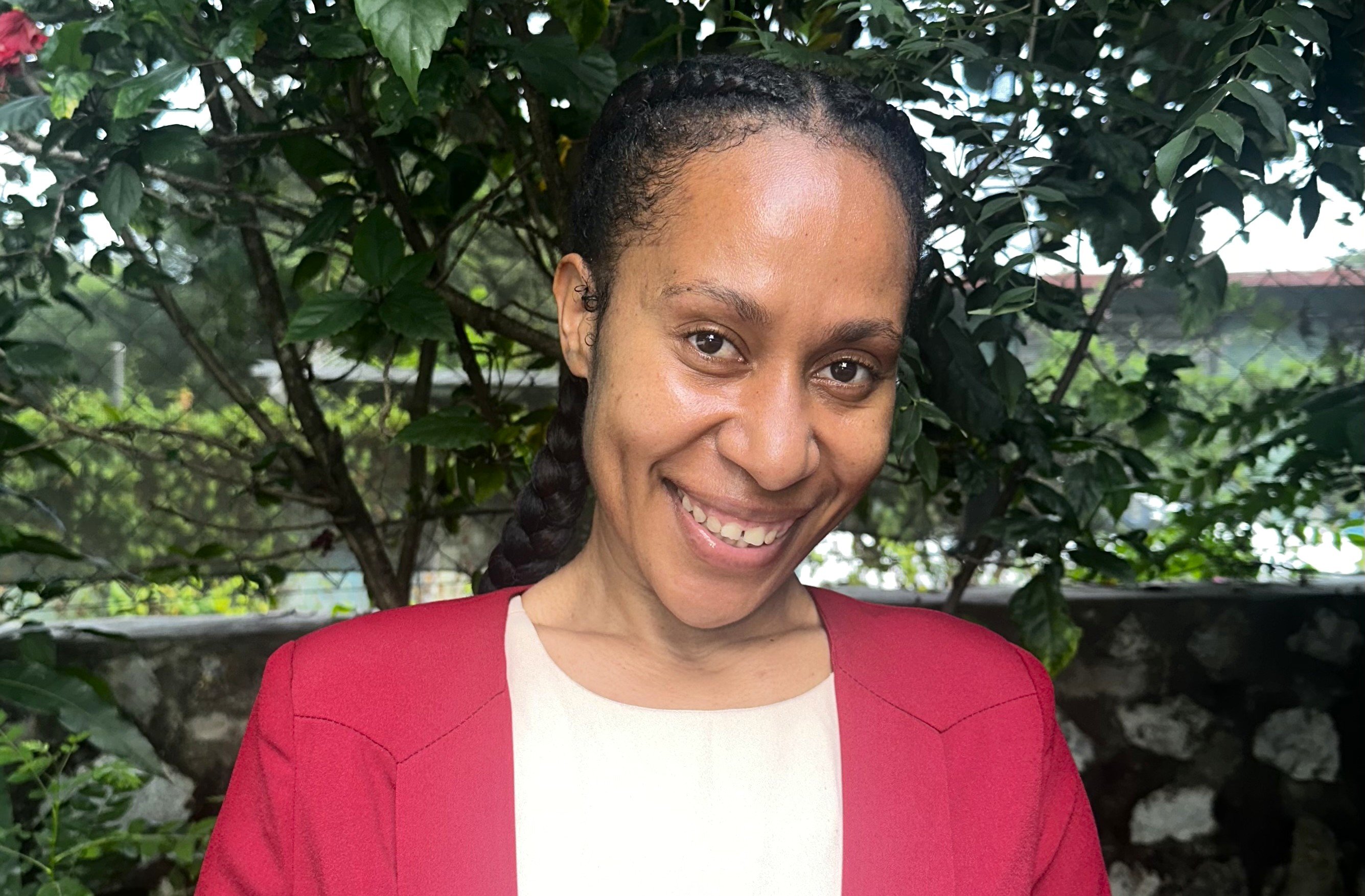
WLI participant and Medical Laboratory Scientist, Natasha Philip, shares how a professional internship with Australian Red Cross (ARC) Lifeblood will support her in developing Papua New Guinea’s first transplant laboratory.
“Earlier this year, I participated in a workplace internship with the Australian Red Cross (ARC) Lifeblood within the Victorian Transplantation and Immunogenetics Services (VTIS) team as part of WLI’s Women’s Developmental Leadership Program,” shares Natasha, who has just graduated from Central Queensland University with a Master of Laboratory Medicine.
Natasha, who spent five years working as a Medical Laboratory Technologist at PNG’s largest general hospital and has a strong interest in cell protein typing and transplantation medicine, was excited to secure a placement at ARC Lifeblood in Melbourne.
“Being immersed in one of Australia’s leading transplant laboratories was, in itself, a major professional milestone. The placement provided a rare opportunity to observe the operations of one of Australia’s leading transplant and immunogenetics laboratories, gaining firsthand understanding of the molecular and immunological techniques that support organ, stem-cell, and platelet compatibility testing,” explains Natasha.
“This internship has definitely provided me with professional insight into the workflow and quality systems of a high-level transplant laboratory, while building my confidence, technical awareness, and professional networks to support the set-up, development and future operations of PNG’s national transplantation services,” she adds.

Rising to the challenge
Reflecting on her experience, Natasha admits she found things overwhelming at first – but learnt something important about herself while rising to the challenge of completing her placement.
“Honestly, at the start it was a lot to take in. The technologies, analytical systems, and workflow interdependencies were entirely new to me. However, I soon began to appreciate the complexity of their systems and how every detail directly contributes to transplant safety and success. I learned that perseverance and curiosity are my strongest leadership traits.”
As well as learning more about her own leadership style, Natasha feels she witnessed first-class leadership in action during her placement with ARC Lifeblood.
“The VTIS team modelled leadership grounded in collaboration, mentorship, and respect. It was a powerful reminder that leadership is not about hierarchy but about enabling others to grow, contribute, and feel valued. Witnessing this has inspired me to adopt the same values when I’m back in PNG, where I plan to build systems that prioritise teamwork, patient safety, and lifelong learning,” says Natasha.
Making a real impact on improving PNG’s transplant services
Natasha’s commitment to using her evolved skills and knowledge to help enhance transplant services in PNG is not only inspiring, it’s necessary.
“Establishing local transplant capabilities means families will no longer need to spend years saving to send loved ones abroad. It means faster diagnosis, timely surgery, and the chance for patients to heal surrounded by their families – free from the emotional and financial burdens of overseas care,” explains Natasha.
“By strengthening links with a world-class institution like ARC Lifeblood and gaining insight into donor-recipient compatibility testing, HLA typing, and virtual crossmatching, I am now better positioned to help translate these practices into the PNG context. This will hopefully reduce reliance on overseas referrals, mean lower costs for patients, and build local capacity in transplantation diagnostics and services.”

According to Natasha, this evolving service model holds strong relevance for the Pacific region, where many nations still depend on overseas referrals for transplant and specialised diagnostics.
“With collaboration, shared expertise, and adoption of quality systems, PNG’s emerging program has the potential to become a regional hub – offering training, support, and knowledge exchange for neighbouring Pacific Island countries.”
Summing her experience up perfectly, Natasha says: “Ultimately, this internship has been one of the most defining experiences of my professional and personal growth journey. It has not only enhanced my technical and leadership skills but also enabled me to contribute meaningfully to the transformation of PNG’s health system and to the vision of greater self-reliance and regional cooperation across the Pacific.”
***
Through the WLI Leaders Hub, participants and alumni of the Women’s Developmental Leadership Program like Natasha apply for and access workplace internships and professional development opportunities, including supported participation in international programs.