

For Kabure Takaria, a passionate environmentalist and WLI alumna from Kiribati, the opportunity to participate in an intensive one-week drone training course in South Perth was a transformative experience – both professionally and personally – and an opportunity to upskill in environmental monitoring.
“It reshaped how I see my own abilities and how I hope to lead and contribute to safer, more effective drone use in my country,” says Kabure, who is currently pursuing an Environmental Rehabilitation Master's Degree at The University of Western Australia.
Combining theory, practical sessions and assessments, the training – which was delivered by Global Drone Solutions – aimed to equip participants with the knowledge of aviation laws, regulations, and safety protocols necessary to operate drones responsibly within controlled and non-controlled airspaces.
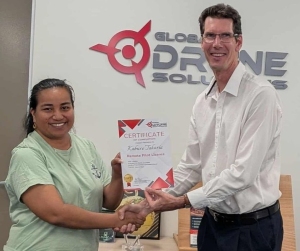
Having successfully completed the week’s training course and the two major assessments required to pass, Kabure was awarded her Remote Pilot Licence and Aeronautical Operator Certificate certifications and is now authorised under the Civil Aviation Safety Authority (CASA) to operate drones of up to 25kg
“One of my greatest achievements from this training was successfully passing both the theory exam and the practical flight assessment. There were only ten participants doing the course, and I was the only woman in the room. Despite the technical nature and intensity of the program, I completed the training successfully, which is something I am very proud of,” shares Kabure.
Rising to the challenge
For Kabure, the training experience reaffirmed that once she’s set her mind on achieving something, she does it – even something technically tricky like piloting a drone. She credits journaling in particular for helping her to prepare mentally for the most challenging aspects of the course, including the practical flying assessment and final exam.
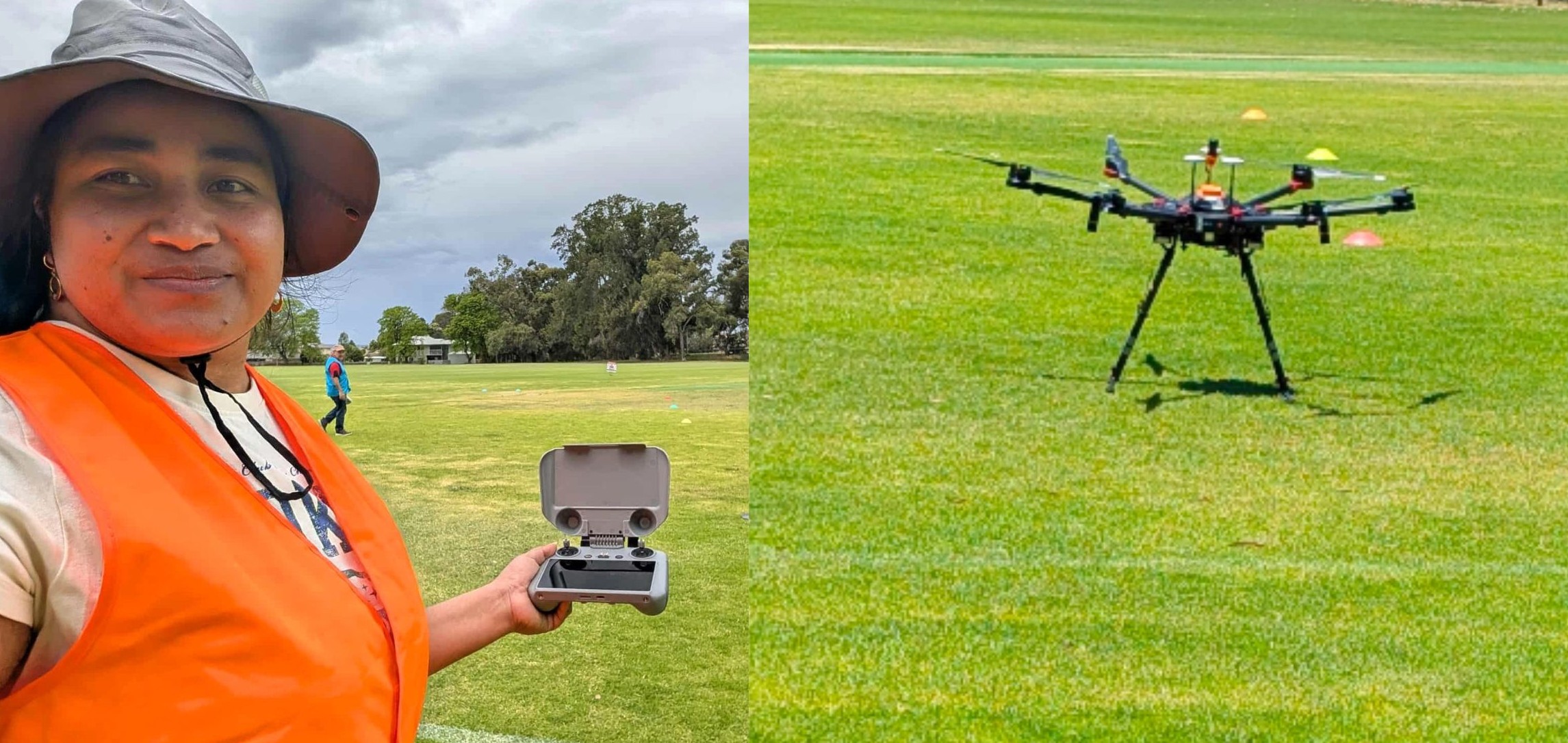
“As I had no prior experience flying a drone, I worried about crashing it. When I expressed my concerns to the trainer, he reassured me that I would be fine. The next morning, before flying, I wrote in my journal: “I can do this. I will be fine.”
For Kabure, that simple act of affirming herself proved powerful.
“When it came time to the flying test, I handled the drone confidently. My trainer even jokingly accused me of lying when I said it was my first time. The opportunity proved that I am far more capable than I think I am,” says Kabure.
Taking the lead back home
In addition to Kabure now feeling much better equipped to use drones for environmental applications — such as data collection, monitoring, and enforcement —the training really drove home how important airspace safety is in regard to flying drones.
“This training has opened my eyes to the critical importance of safety and regulation in drone operations. I now understand much more about drone safety considerations, responsibilities, and legal obligations,” says Kabure.
Growing up on the remote Fanning Island of Kiribati gave Kabure a deep appreciation for the sustainable use and protection of natural resources and the environment to sustain livelihoods. Naturally, Kabure fully intends to apply her newly acquired knowledge and drone skills to assist with monitoring and protecting ecosystems in her home country.
“Safety is paramount when it comes to flying drones, yet most people back home [in Kiribati] operate drones illegally and without proper training. Successfully completing this training means that I’m now well prepared to pilot drones in environmental applications, fully adhering to safety protocols for the public and crew members in my country,” says Kabure.
****
Through the WLI Leaders Hub, alumni of the Women’s Developmental Leadership Program like Kabure apply for and access workplace internships and professional development opportunities, including supported participation in international programs.