
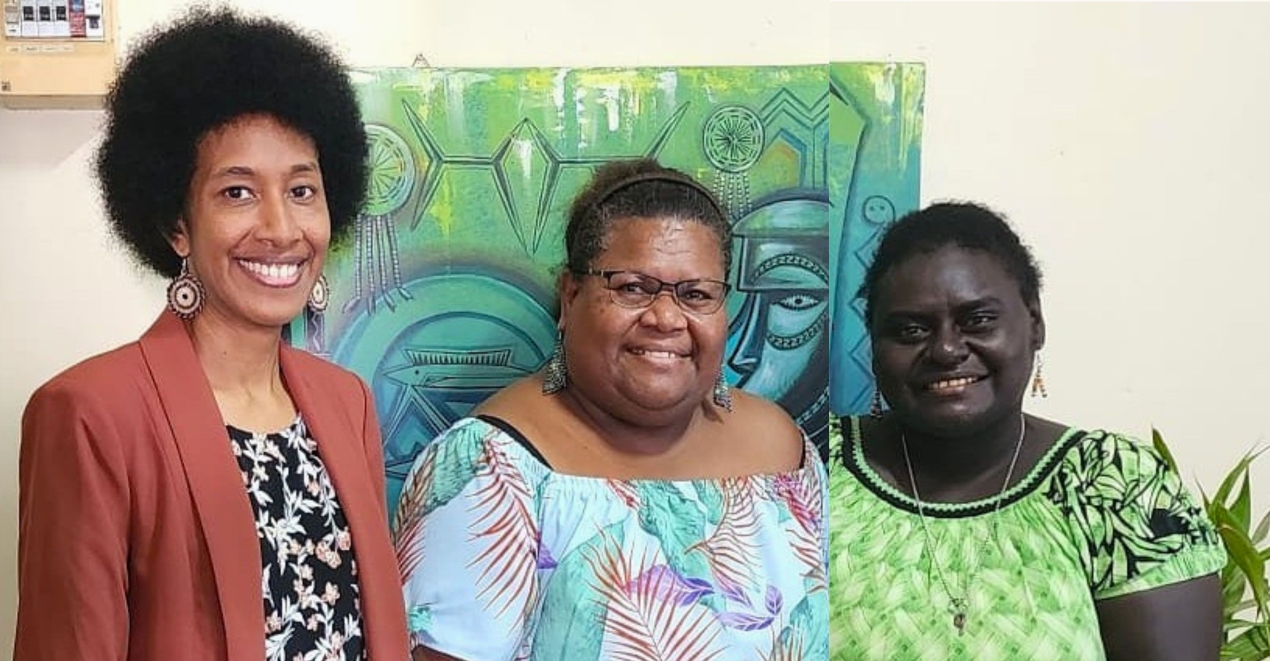
The work of WLI alumna and Postdoctoral Research Fellow at the ARC Centre of Excellence for Indigenous Futures, Dr Irene Semos from Papua New Guinea (PNG), is contributing to Indigenous, Melanesian relational scholarship and research methods that bridge the gap between academic inquiry and the lived experiences and practices of communities. Irene’s work is rooted in critical thinking, collaboration, and a deep commitment to empowering Indigenous communities through innovative research and impactful solutions.
With close to 20 years in academia, including tenure as a Senior Lecturer at Divine Word University (DWU), Irene has expertise in public health, higher education curriculum design, and Indigenous research. Her leadership focus has been on foregrounding the voices of people in communities at the intersection of health systems, policy and community engagement.
“I am motivated by a mission to support sustainable change and knowledge transfer in Papua New Guinea, the broader Pacific, and Indigenous communities globally,” says Irene.
In collaboration with fellow WLI alumna and public health/nursing professional, academic and researcher, Dr Lydia Kaforau and Emelda Ariku, a researcher at Solomon Islands National University (SINU), Irene recently delivered a successful research project with support from the WLI program’s Leadership Fund.
%20and%20Dr%20Irene%20Semos.jpg)
Establishing leadership, confidence & capability
The project’s core focus centres on strengthening research in Solomon Islands through Tok Stori and a Participatory Action Research (PAR) workshop. Tok Stori is a Melanesian term for an integral part of everyday life for Melanesians, including Solomon Islanders – telling stories, creating a joint narrative, building relationships and making sense of life, often in an informal setting.
The main objective of the project is to build, engage and establish an ongoing scholarship of Melanesian research in the Solomon Islands with researchers, community partners and WLI alumni from across the Pacific region.
The project came to life thanks to Irene, Lydia and Emelda’s shared connections, interests and expertise in higher education, public health and Indigenous research. Between them they brought together an impressive network of health workers, teachers, community leaders, elders, women leaders, academic staff at SINU, and other WLI alumni – all of whom were very keen to participate in the project.
“The project’s two-day workshop focused on establishing leadership, confidence and capability of Melanesian scholars in co-designing a participatory actioned, culturally responsive model of health resilience,” explains Irene, adding: “The objective is ongoing, myself, Lydia and Emelda will put together a peer-reviewed paper publication on the reflective approach of PAR – an iterative process where participants and researchers collectively examine their actions, assumptions, and findings to drive to create knowledge and social change. ”

A shared success
According to Irene, the approach to the PAR Tok Stori was geared towards equal participation and engagement by the participants and was very well received.
“Transformational social change was a big theme captured from the participants and this informed the extent of confidence and capability of the researchers, facilitators and participants,” she says.
Reflecting on how the project provided her with an opportunity to showcase and develop her leadership skills, Irene shared:
“I think this project was the first of its kind to have cross-country alumni collaboration and fits in nicely with the aid agenda in the Pacific to strengthen Pasifika led, research quality and capabilities. I displayed my leadership skills in different ways – through financial management, decision making, subject matter expertise, and most importantly through working with different people in different communities of practice from various contexts in Solomon Islands.”
Irene emphasised that the project – and the ongoing work it involves – very much relies on collaborative effort and acknowledged Emelda and Lydia’s input.
“I really appreciate Emelda’s support in the everyday running of things, as well as her care and support to me as I have been her mentor throughout her career in PNG and now in the Solomon Islands. And huge thanks to Lydia too, whose connections made the workshop possible.”
Irene also credited Lydia’s knowledge for helping her gain further insight into Solomon Islands’ health and community experience of sharing stories and ideas together.
“I also learnt a bit of Solomon’s Pidjin, an added bonus for those of us who have that connection and relationship to our Wansolwara people in the Solomons,” she adds.
An ocean of knowledge
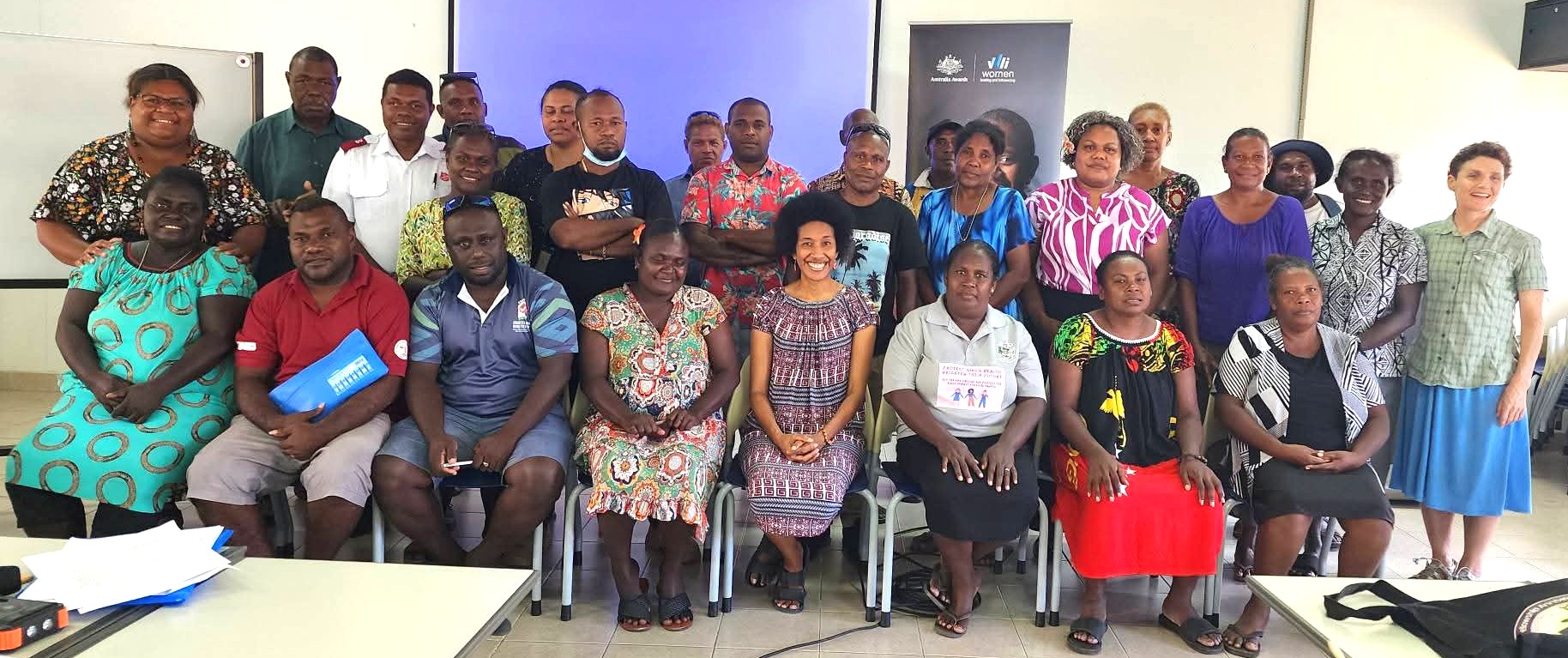
According to Lydia, the workshop was one of the best she’s attended, especially in regard to the depth of knowledge shared and the diversity of participants.
“The most beautiful thing I experienced was bringing men and women of diverse levels and academic calibre into one room to interact and discuss ideas for community resilience in their communities and situations. We had three PhD academics with nursing backgrounds who spent many years in rural nursing; two rural doctors and a dentist; and retired nurses and police officers who are now community leaders. We also had teachers, nurses, pastors, women and community leaders. The workshop allowed participants to learn from each other. The room was like an ocean of knowledge and Indigenous wisdom,” says Lydia, who is well known in Solomon Islands’ health care sector.
“The room was like an ocean of knowledge and Indigenous wisdom.” – Dr Lydia Kaforau
Lydia added that: “At the end of the workshop, participants designed brilliant health models for their communities using Tok Stori, the PAR process, and Indigenous knowledge and wisdom. Most are inspired to express their hearts, emotions, and appreciation for Dr Semos and the facilitators. One key successful achievement was that we have also created new connections with the participants that will be the pivotal platform for the next phase of the project.”
For Emelda, the workshop was no less inspiring.

“The workshop was very insightful for me, and I learnt and understood the use of PAR. I’m so grateful that I had the opportunity to attend. I now feel much more confident in using PAR in any research and feel very thankful to Irene for sharing her expertise and for facilitating the workshop so well. I also learnt how to get people together; dealing with logistics, the importance of effective communication and networking. All of these contributed to a highly effective workshop,” says Emelda.
Sharing one final reflection, Irene highlighted how: “The project was especially supported by the male academics at SINU and participants. They will be champions of our ongoing research project, too,” she adds.
Through the WLI Leaders Hub, alumni of the Women’s Developmental Leadership Program like Irene apply for and access workplace internships and professional development opportunities, including supported participation in international programs and conferences.